
How-to & Style



Subscribe Primitive Skills: https://bit.ly/2PIGcBc Never miss a video! enable ‘ALL’ notifications
Follow Primitive Skills 😍👇
► new channel: https://bit.ly/2PkAMgz
► Website: http://primitiveskills.net
► Page: https://bit.ly/2EdHDSS
► Group facebook: https://bit.ly/2PQxb9o
► Donate Paypal: https://bit.ly/2PlSOiC
© Copyright belongs to Primitiveskills.net
Category
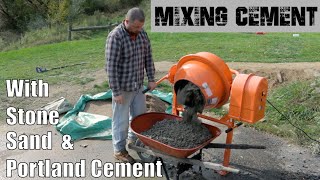

MOST RECENT DRY POUR LINK HERE⬇️
DRY POURING CONCRETE over EXISTING PATIO…What You Need To Know
https://youtu.be/i5PwQFQvbd8
DRY POUR CONCRETE WALKWAY: 4 Inches Thick WITH Reinforcement. Anyone Can Do It!
https://youtu.be/_50MXEHr678
BEST COLD CLIMATE DRY POUR!⬇️
Our friends in Minnesota, Jenna & Teddy @TheLiFeInPines https://youtu.be/JfLQFPF8Ulk
Step by step, we teach you how to dry pour your own slab for LESS THAN $60! This is a great method to use if you are looking for an area to cover with concrete, but want to do it on your own.
We go in depth on all the “how to”, plus share tips & tricks along the way to help make your slab turn out perfect.
We appreciate every Like, Share, Comment & Subscription!
Welcome Back, Cajun Family!
Business Inquiry: cajuncountrylivin@thestation.io
Merchandise: https://cajuncountrylivin.squarespace.com
P.O. Box 122
Starks, La
70661
Send us a card & we will send one back!!

Gary Wentz, senior editor at The Family Handyman, will show you how to mix concrete. These hints and tips will save you time and energy. For more home-improvement tips and tricks please visit the Family Handyman website at: https://www.familyhandyman.com

Making a small concrete pad is a lot of work, but is pretty easy overall and something that most anybody can do! I'll go over every step so yours turns out great.
Concrete Calculator
https://www.calculator.net/con....crete-calculator.htm
Help support the channel and the things I can show by using the links below, it costs nothing to use them, but helps me out so I can help you!
- Tools/Materials Used (affiliate)
For Canadian buyers:
Trowel - https://amzn.to/3cRStlS
Edger - https://amzn.to/3bguQDf
Float - https://amzn.to/3PJHM3n
Brush - https://amzn.to/3oCVRDU
For USA buyers:
Trowel - https://amzn.to/3Sa8eVy
Edger - https://amzn.to/3Jg1GAE
Float - https://amzn.to/3cQXjA1
Brush - https://amzn.to/3JuZHsB
**************************************
Jesse Does DIY links:
🛠Email: jessedoesdiy@gmail.com
🛠Project Plans: https://jessedoesdiy.etsy.com
🛠Instagram: https://www.instagram.com/canadiyan_jesse/?hl=en
🛠Instructables: https://www.instructables.com/....member/Jesse+does+DI
Other Channel with Slade:
https://www.youtube.com/channe....l/UC-qQtqcjoWHbNn9Kg

Diy Cement ideas making cement block bricks easily
Hello guys!.Thank you all for staying and supporting me!, I wish you good health and happiness with loved ones.
If you like it or love me click Like and Share!
Thanks and regards!
1.Amazing wood stove - Create wood stove from iron paint bucket👇
https://youtu.be/Gk1izMnzU0M
2.Creative smokeless wood stove from waste bricks and Styrofoam box👇
https://youtu.be/SBwi3iGIdnA
3.Make Creative Firewood Stove From Plastic Bucket-idea from cement and clay👇
https://youtu.be/9quMO1MB5Jk
4.DIY Cement Ideas How To Making Rocket Stove Wood Burner From Foam Box - Smokeless Stove For Camping👇
https://youtu.be/ev4muW8Qrx0
5.DIY Cement Ideas Making Rocket Stove Wood Burner From Paint Bucket👇
https://youtu.be/kKRqlpSutC8
6.Amazing Cement Ideas Making Stove Wood Burner From Plastic Chair👇
https://youtu.be/SQjX6BtTCck

📺▸ Thanks For Watching.
👷♂️▸ Mixing Ratio
▸Soil | 12
▸Cement | 01
💡▸ 𝐌𝐨𝐫𝐞 𝐁𝐫𝐢𝐜𝐤 𝐈𝐝𝐞𝐚𝐬
▸ Quarry Dust Bricks | https://youtu.be/dc3eoOq1ekU
▸ Aggregate Bricks | https://youtu.be/0T2i_CRifms
▸ Kabok Stone Bricks | https://youtu.be/9wGgco7IFzo
▸ Soil Quarry Dust & Aggregate Bricks | https://youtu.be/c8ifyWe9KH8
Go to the link below to buy the T-Shirts, Bags, Phone Cases, Pillows & More
👕🎒📱📦 👉 https://bit.ly/2BthYqW
Like us on Facebook 👉 https://bit.ly/2Vtd9Ve
Contact us 👉 kumbukinfoandbusiness@gmail.com
Foods & Beverages 👉 https://bit.ly/3dD0s14
Gardening 👉 https://bit.ly/2YBqFJa
360 👉 https://bit.ly/3g0JWt9
#SoilBricks #Soil #CementBlock #BricksMaking #HomemadeBrick #CementBricksBusiness #CementBricksMixingRatio #CementBrickSize #CementBricksEasily #CementBricksDesign #CementWork #Bricks #BrickProduction #BricksIdeas #ManualBrickMold

Primitive Technology: Wood Ash Cement & Fired Brick Hut
Subscribe: http://bit.ly/subPT | Never miss a video! Enable ‘ALL’ Notifications!
Watch my newest content: https://youtube.com/playlist?list=PLGnWLXjIDnpBR4xqf3FO-xFFwE-ucq4Fj&playnext=1&index=2
Follow Primitive Technology:
Wordpress: https://primitivetechnology.wordpress.com/
Patreon: https://patreon.com/user?u=2945881
Watch More Primitive Technology:
Newest Uploads: https://youtube.com/playlist?list=PLGnWLXjIDnpBR4xqf3FO-xFFwE-ucq4Fj&playnext=1&index=2
Pyrotechnology: https://youtube.com/playlist?list=PLGnWLXjIDnpBVRqu5lz5JGaQxjPs7q3CJ&playnext=1&index=2
Shelter: https://youtube.com/playlist?list=PLGnWLXjIDnpBBsdKZb-vy30o88SIxItp2&playnext=1&index=2
Weapons: https://youtube.com/playlist?list=PLGnWLXjIDnpA-XGDrrmVgBnSXx15i2Awp&playnext=1&index=2
Popular Videos: https://youtube.com/playlist?list=PLGnWLXjIDnpAb29Lrdki5BPjTpMon8zla&playnext=1&index=2
About This Video:
I built a hut from fired clay bricks and mortared them together with a cement made from wood ash left over from the firing process. When I developed wood ash cement years ago in a previous video, it was in response to the need of a cement made from material other than lime stone, which is absent in my location. Wood ash was suitable because it contains calcium oxide, the active cementitious material for making mortar. I made clay bricks and fired them in a kiln made previously. Then I collected the wood ash and made them into pellets storing them for later use. When it was time to make the mortar, I put the pellets in the kiln and fired them. Here it's important to note that the ash needs to be fired at a high temperature with oxygen, ordinary ash from a camp fire won't work as is because they don't get hot enough. It needs to be pelletized and fired again in a kiln before use. I mixed the fired ash pellets with sand (1:3 ratio by volume) and used it to mortar the bricks together. It's important to use a trowel (flat piece of wood here) instead of bare hands to handle the mortar due to lye burning the skin (I got mild lye burns on my fingers). The ash left over from firing the bricks was enough to mortar those same bricks together. The hut was 2x2 m and 2 m high at the gables. Wooden beams were placed onto the gables to form the roof and secured in place with mortar. Then I made barrel roof tiles and lay them onto these beams. The whole project took 6 and a half months to build. The hut sheds rain well and the mortar is water proof (won't dissolve in water), surviving many rainstorms even before the roof was up. The main take away from this video is to always look for a way to take a waste material (wood ash) and make it into a resource (cement).
About Primitive Technology:
Primitive technology is a hobby where you build things in the wild completely from scratch using no modern tools or materials. These are the strict rules: If you want a fire, use a fire stick - An axe, pick up a stone and shape it - A hut, build one from trees, mud, rocks etc. The challenge is seeing how far you can go without utilizing modern technology. I do not live in the wild, but enjoy building shelter, tools, and more, only utilizing natural materials. To find specific videos, visit my playlist tab for building videos focused on pyrotechnology, shelter, weapons, food & agriculture, tools & machines, and weaving & fiber.
#PrimitiveTechnology #WoodAshCement #FiredBrickHut

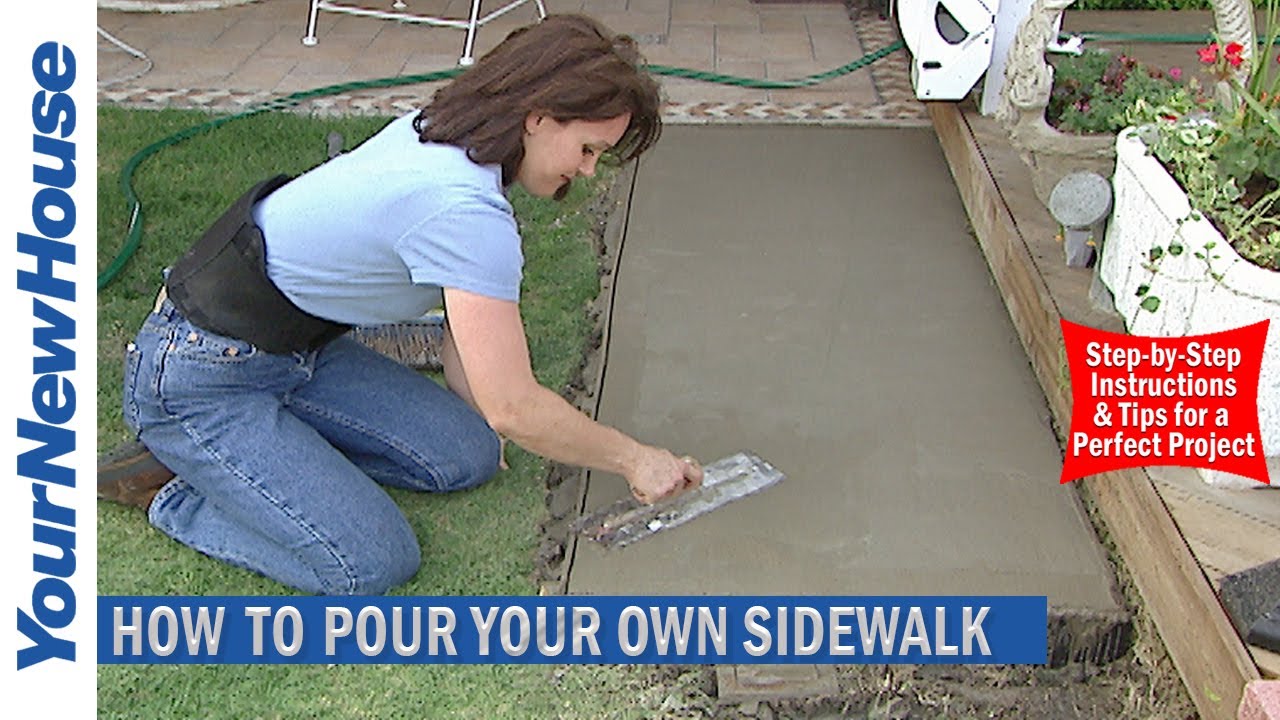
Bosch demo hammer: https://amzn.to/2zSqJuy still needs the shovel attachment: https://amzn.to/2z6CQnm
A well reviewed option for less than $200: https://amzn.to/3dD7pjC
Quikrete Concrete Expansion Joint: https://amzn.to/2A30IIX
Due to requests, I am now including links to products when possible. These links are provided for reference, no company or individual paid to be in this video. Depending on the vendor, a small commission might be paid and if so, would be used to support continuing this channel.
Amazon Prime free 30-day trial: https://amzn.to/2U9pttN
More Teresa and YNH: https://www.youtube.com/playli....st?list=PLjTMbsoHW2e
Installing a walkway can be a very labor intensive job, but if you do it yourself, you can save a lot of money over hiring contractor.
Before you get started, you’ll need the following materials.
-fiber reinforced concrete
-claw hammer
-line level: https://amzn.to/2AxwsFX or https://amzn.to/3gYpxGL
-wooden stakes
-expansion joints: we used https://amzn.to/2A30IIX
-wood forms
-trowel
-wheelbarrow
-Bosch electric shovel: https://amzn.to/2zSqJuy or manual equivalent
-concrete mixing tools
-broom
-tape measure
First, determine how long and how wide you want your walkway to be. After you’ve measured the width, drive a stake into the ground on both sides of where you’ll begin, these stakes will be your reference points for the remainder of the project.
Then, attach a screw to the lower third of the first stake. Use a line level to make sure you’ve got the proper angle of drainage away from the house.
The line level is basically a long piece of string strung through a small level. The string fits through two holes on top of the level, so you can slide the level along the string.
Take one end of the string, attach it to the screw you’ve installed on the first stake, drive a second stake at the end of your proposed walkway. Attach the other end of the string to this stake and check to make sure that you will have proper drainage. In other words, you don’t want the bubble to show “level”,you want there to be a slight slope away from the house. (Failure to make sure water will drain away from your house could later cause foundation problems)
Next, use a shovel or the Bosch electric shovel, to dig out the area of your walk.
Once this is done, sink a stake about ever two feet on both sides of the cut out ground where your walkway will go. Then take 3” X 4’ pieces of plywood and attach them at ground level to the stakes. You can use a cordless screwdriver to hold the plywood to the stakes. These pieces of wood are your concrete forms which will hold the cement in place when you’re ready to pour the walkway.
But first, put in your expansion joints. Expansion joints are installed about every three feet and are used to keep your concrete from cracking during expansion and contraction in hot and cold weather.
Using fiber reinforced concrete, which we used in this segment, is a good idea. The hundreds of thousands of tiny fibers give the concrete extra strength as is hardens, thereby eliminating the need for wire mesh or re-bar to support ordinary concrete.
Mix your concrete in a wheelbarrow. Then pour the walkway into the forms. Use a trowel to smooth it out and make sure you have a nice even finish.
TIP: Before the concrete dries, use a broom to give the surface texture. Simply take a broom and lightly sweep across the concrete from side to side. This will put small grooves into the concrete surface as it dries and will reduce the chance of your walkway being slippery when wet.
After the concrete has thoroughly dried (usually five days) remove the outer forms and stakes and you’ve got a beautiful walkway.
WHAT WE USED
The material used to install the backyard sidewalk was Quikrete Fiber Reinforced Concrete.
Quikrete’s fiber reinforced concrete contains hundreds of thousands of tiny fibers which finish smooth, eliminating the need for wire mesh or heavy re-bar in many slab-on-grade applications like walkways, patios steps etc. Specially developed to minimize cracking, chipping and flaking.
Fiber reinforced concrete also dramatically reduces cracking caused by drying shrinkage.
Quikrete Expansion Joint Strips, https://amzn.to/2A30IIX protect concrete slabs from potential damage caused by expansion and contraction. Made from cane fiber, the five foot long strips are weather resistant, absorb very little water, and do not become brittle in cold weather.
Amazon Tool Deals: https://amzn.to/3eUkYLB
MORE FROM YOUR NEW HOUSE
Featured videos:
https://www.youtube.com/playli....st?list=PLjTMbsoHW2e
Great DIY Projects from Your New House:
https://www.youtube.com/playli....st?list=PLjTMbsoHW2e
Quick Tips:
https://www.youtube.com/playli....st?list=PLjTMbsoHW2e
Gardening and Landscaping:
https://www.youtube.com/playli....st?list=PLjTMbsoHW2e
This video will teach you how to make Cement at home
To access and download the Sunshine Resources Production Guidelines E-book
send WhatsApp Message to the phone number 2348036496351
Click on the link below to visit the Sunshine Resources Stores:
https://flutterwave.com/store/....sunshineresourcessto
Click on the link below to make a payment
https://flutterwave.com/pay/productionebook
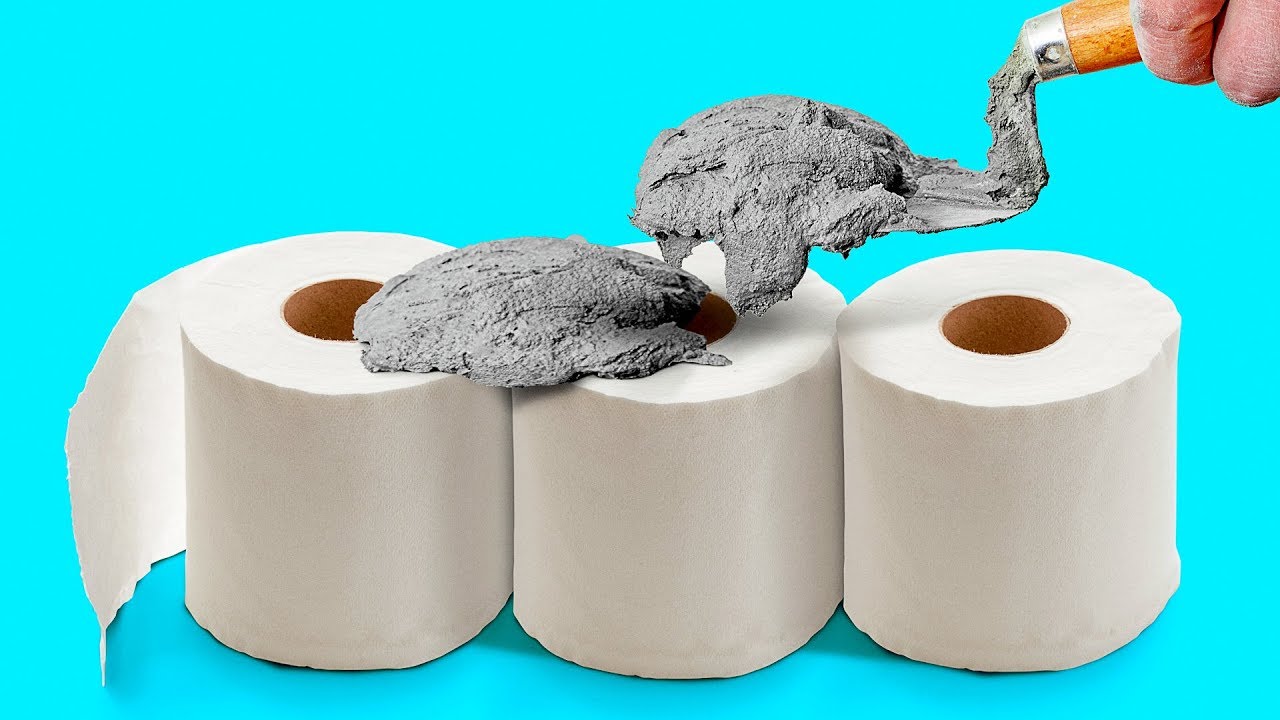
Upgrade your apartment with these easy DIY ideas
Does your room seems boring to you? Don't worry, we've got it covered! Here are some crazy cool crafts and DIYs that will definitely leave you inspired. Just prepare some cement and polymer clay.
DIY lamp stand
If even Ikea lamp stands look boring to you, it is time to create something unique. Take 10-12 old books that you won't read anymore and mix a bowl of cement. Put the books in the cement mixture one by one and then place them one on another randomly to create a column. Let dry. Well done! Now you can put your lamp on this unique handmade lamp stand that makes your room look so cozy :)
Easy planters
Do you like plants and flowers in your house? So do we! However, common planters may look boring. Here is a simple DIY idea for you. Take a pair of rubber gloves for cleaning and fill them in with some cement. Put both gloves in a big bowl to create a round shape and let dry. Carefully cut off and remove the gloves. Fill the cement hands with ground ans plant your favorite flowers. By the way, it can be a really nice gift idea for your family and friends.
Watch the video for more DIY cement home decor ideas.
Timestamps:
00:47 DIY lamp stand from old books
02:38 An easy and lovely way to reuse old light bulbs
05:25 Cute little candle holders
07:10 Amazing garden decor from old toys
10:29 Handmade polymer clay ideas
----------------------------------------------------------------------------------------
Our Social Media:
Facebook: https://www.facebook.com/5min.crafts/
Instagram: https://www.instagram.com/5.min.crafts/
Twitter: https://twitter.com/5m_crafts
Subscribe to 5-Minute Crafts GIRLY: https://goo.gl/fWbJqz
Subscribe to 5-Minute Crafts KIDS: https://goo.gl/PEuLVt
Subscribe to 5-Minute Crafts MEN: http://bit.ly/2S69VUG
The Bright Side of Youtube: https://goo.gl/rQTJZz
----------------------------------------------------------------------------------------
For more videos and articles visit:
http://www.brightside.me
Music by Epidemic Sound: https://www.epidemicsound.com/ This video is made for entertainment purposes. We do not make any warranties about the completeness, safety and reliability. Any action you take upon the information on this video is strictly at your own risk, and we will not be liable for any damages or losses. It is the viewer's responsibility to use judgment, care and precautions if one plans to replicate.
The following video might feature activity performed by our actors within controlled environment- please use judgment, care, and precaution if you plan to replicate.
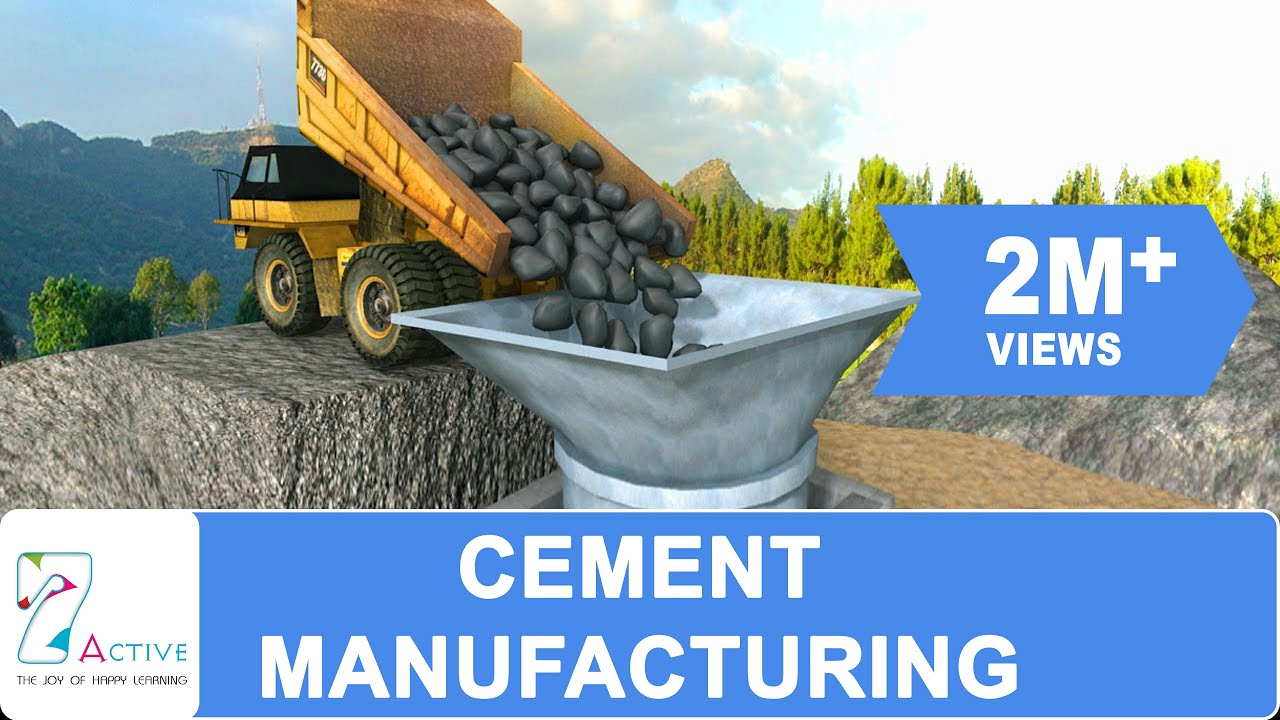
#cement #manufacturing
Follow us: https://www.instagram.com/7activestudio/
For more information:
www.7activestudio.com
7activestudio@gmail.com
Contact: +91- 9700061777, 040-66564777
7 Active Technology Solutions Pvt.Ltd. is an educational 3D digital content provider for K-12. We also customise the content as per your requirement for companies platform providers colleges etc . 7 Active driving force "The Joy of Happy Learning" -- is what makes difference from other digital content providers. We consider Student needs, Lecturer needs and College needs in designing the 3D & 2D Animated Video Lectures. We are carrying a huge 3D Digital Library ready to use.
Voice Over Credit: Muls N Ravs Entertainment Pvt. Ltd. (www.mulsnravs.com)

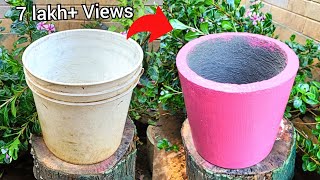
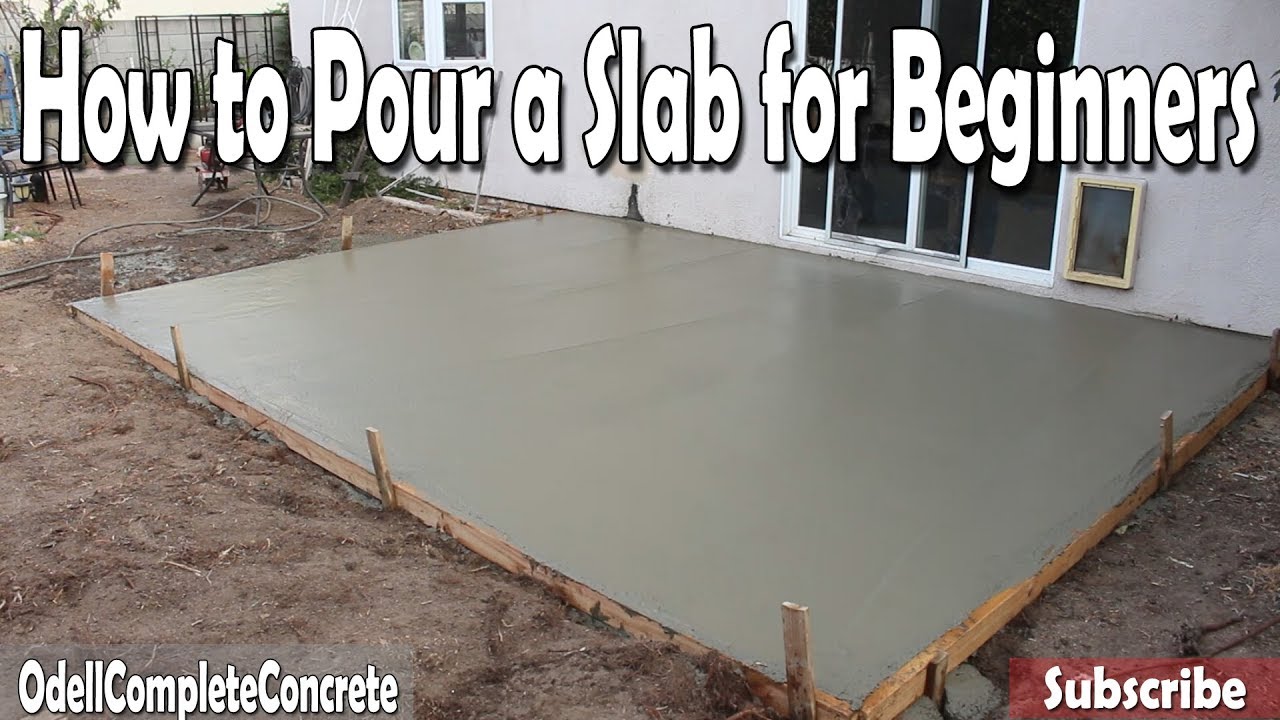
*WE HAD A MASSIVE DRIVEWAY POUR IN THE FRONTYARD THIS DAY WHICH IS WHY THERE WAS SO MANY GUYS* In this video we show you how to pour your basic 16 x 12 Concrete Slab! We go over all the necessary steps for your concrete slab to come out perfect! We show you how to form the slab, put rebar in at 2ft x 2ft centers, rod it, bull float it, put joints in, edge it, use the fresno/Big Blue and broom it. We hope you find this information Valuable and to help you on your next project! If there are any questions please dont hesitate to comment below and dont forget to like share ans subscribe! It helps motivate us to teach and bring more videos to all of you knowing these videos help! Thank you all for your support!
OFFICIAL INSTAGRAM - https://www.instagram.com/odellconcrete/
Website: http://DavidOdellConcrete.com
David Odell's Store: odellcompleteconcrete.com

Primitive Technology: Wood Ash Cement - Creating wood ash cement from scratch
Subscribe: http://bit.ly/subPT | Never miss a video! Enable ‘ALL’ Notifications!
More videos, watch me cultivate and cook yams from scratch: http://bit.ly/2L5HmqY
Follow Primitive Technology:
Wordpress: https://primitivetechnology.wordpress.com/
Patreon: https://patreon.com/user?u=2945881
Watch More Primitive Technology:
Latest Uploads: https://youtube.com/playlist?l....ist=PLGnWLXjIDnpBR4x
Pyrotechnology: https://youtube.com/playlist?l....ist=PLGnWLXjIDnpBVRq
Shelter: https://youtube.com/playlist?l....ist=PLGnWLXjIDnpBBsd
Weapons: https://youtube.com/playlist?l....ist=PLGnWLXjIDnpA-XG
Popular Videos: https://youtube.com/playlist?l....ist=PLGnWLXjIDnpAb29
Partial credit for this idea goes to James Keane who I discussed this with on my wordpress site (see conversation): https://primitivetechnology.wordpress.com/2018/03/06/lime/#comment-9736
I developed an experimental cement from made only from re-fired wood ash as its cementitious material. It was mixed with crushed terracotta as an aggregate and formed into a cube. The cement set hard after 3 days and did not dissolve in water after this period.
Process: First I burnt bark and leaves in a kiln at high temperatures to produce well burnt, mostly white wood ash. The ash was then mixed into water and stirred well. The excess water was poured off and the resulting paste was made into pellets and allowed to dry. A pellet was then re-heated in the forge until it glowed about orange hot. This was then taken out, cooled and dropped in a pot of water. The pellet dissolved and boiled due to a chemical reaction with the water. The paste was stirred and crushed terracotta (old tiles from previous projects) was added and mixed to form a mouldable mortar. This was formed into a cube and allowed to set for three days (in the video, a cube made exactly the same way 3 days previously was used due to time constraints). The resultant cube was strong and made a slight ringing sound when tapped with a finger nail. It was placed in water for 24 hours to simulate a very heavy rain event and did not dissolve or release residues into the water.
My current theory: The main component of wood ash consists of calcium in some form (e.g. calcium carbonate, calcium oxide). This can be up to 45% from my research. Calcium is in higher concentration in the bark and leaves of a tree. When the ash is mixed with water, the soluble component of wood ash (10% pot ash) dissolves into the water. But seeing that it does nothing for the cementing process, it is drained off leaving the insoluble calcium (and other components) in the paste. Doing this probably raises the relative percentage of calcium in the paste to about 50% or more. Most of the other 50 % consists of silica and alumina which are pozzolans, materials that chemically react with calcium hydroxide to increase the durability of the cement product. The paste was then made into a pellet and fired again to high temperature to convert all the calcium compounds to calcium oxide. It also reduces any charcoal in the pellet to ash if it hadn’t already been burnt the first time. This step seemed important as un-fired ash pellets only partially hardened and would fall apart in water, though retaining a weak undissolved 5mm thick crust. I can only surmise that re-firing the ash just gave a greater conversion of the calcium components to calcium oxide. The pellet is slaked in water converting the calcium oxide to calcium hydroxide. This cement was mixed with crushed terracotta which may also help in some way that I’m not aware of as I only did this one experiment and did not test other aggregates yet (e.g. sand, gravel etc.). Terracotta is porous and might hold together better than other materials. The mixture is allowed to set in air where carbon dioxide reacts with calcium hydroxide to form calcium carbonate cementing the aggregate together. After this, the cement will not dissolve in water.
Use: I think this material might have a potential use as a mortar holding rocks or bricks together in wet environments where limestone or snail shells are unavailable for making cement. Wood ash is a pretty ubiquitous material to most natural environments inhabited by people using biomass fuels. Wood ash cement turns a waste product into a valuable building material. From my research, wood ash is already being used as a partial replacement for cement in the building industry without decreases in strength of the final product. But I’ve only just started experimenting with it and don’t know its full capabilities and limitations. Calcium content of wood ash differs depending on the species of tree, the part of the tree burnt and the soil it’s grown on. Cautious experimentation is still required before committing to a hut built from this material.
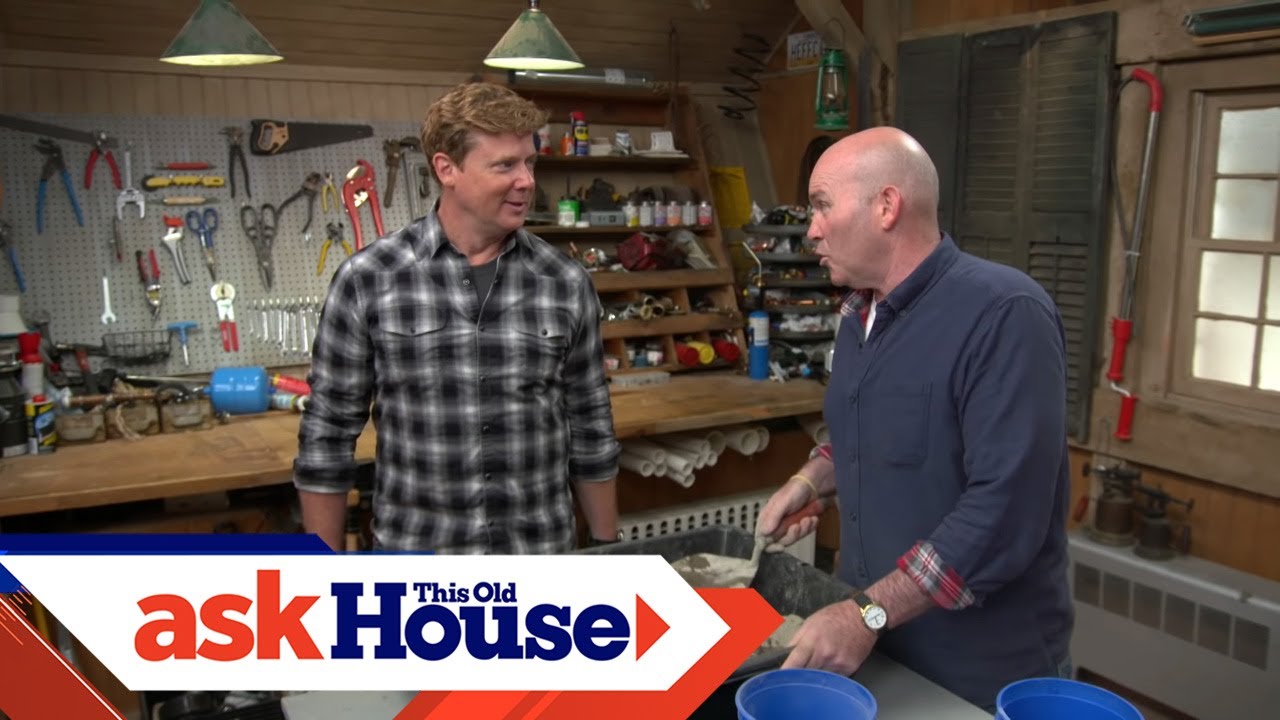
Ask This Old House mason Mark McCullough explains the basics of making concrete
SUBSCRIBE to This Old House: http://bit.ly/SubscribeThisOldHouse
Time: 10 minutes
Cost: $20
Skill Level: Beginner
Tools List for Making Concrete:
Trowel
Mixing bucket
Bucket for measuring
Shopping List:
Sand in bulk
Aggregate in bulk (crushed stone, etc.)
Portland cement in bulk
Steps:
1. Measure out each ingredient in the following proportion: 3 parts sand, 2 parts aggregate, 1 part Portland cement. Use a bucket to help keep the measurements accurate.
2. Pour the sand, aggregate, and Portland cement into a mixing bucket. To make the mix stronger, add more aggregate and Portland cement.
3. Add water slowly to the bucket and begin to mix it up with the trowel. Add more water as needed until the concrete is at the correct consistency.
Resources:
Most concrete can be made using a premixed bag, like the one Mark demonstrated, which is manufactured by Quikrete (https://www.quikrete.com/).
For bigger jobs that require a lot of concrete, it’s cheaper to make the concrete yourself. The sand, aggregate, and Portland cement can all be found at masonry yards.
Expert assistance with this segment was provided by MJM Masonry (http://mjmmasonry.com/).
About Ask This Old House TV:
Homeowners have a virtual truckload of questions for us on smaller projects, and we're ready to answer. Ask This Old House solves the steady stream of home improvement problems faced by our viewers—and we make house calls! Ask This Old House features some familiar faces from This Old House, including Kevin O'Connor, general contractor Tom Silva, plumbing and heating expert Richard Trethewey, and landscape contractor Roger Cook.
Follow This Old House and Ask This Old House:
Facebook: http://bit.ly/ThisOldHouseFB
Twitter: http://bit.ly/ThisOldHouseTwitter
http://bit.ly/AskTOHTwitter
Pinterest: http://bit.ly/ThisOldHousePinterest
Instagram: http://bit.ly/ThisOldHouseIG
http://bit.ly/AskTOHIG
Tumblr: http://bit.ly/ThisOldHouseTumblr
For more on This Old House and Ask This Old House, visit us at: http://bit.ly/ThisOldHouseWebsite
How to Make Your Own Concrete | Ask This Old House
https://www.youtube.com/user/thisoldhouse/