- Film & Animation
- Music
- Pets & Animals
- Sports
- Travel & Events
- Gaming
- People & Blogs
- Comedy
- Entertainment
- News & Politics
- How-to & Style
- Non-profits & Activism
- Religion & Spiritual
- Health Natural Remedies
- Gardening +
- Arts & Crafts
- Action
- Hair & Beauty
- Hunting & Survival
- Shopping & Reviews
- Motivational & Self Help
- Jesus
- Marriage
- Live TV
- Programing & Coding
- Latest & Gadgets
- Make You Own
- Unexplained & Stange
- Jesus Christ
- Food & More
- Other
Top videos


Dr. Tess' husband shares a frightening story of being completely fit, then suddenly collapsing. He was a 40-year-old brilliant doctor who all of a sudden couldn't tie his shoes. Here's what helped, on California Live Tuesday, Sept. 10, 2019.
———
“California Live” takes viewers across the state to experience must-see destinations, a diverse culinary scene, thrilling adventures, and everything top-of-mind to Californians. Find out what’s new out of Silicon Valley, explore the beauty of wine country, get a daily dose of Hollywood, see why San Diego is coined “America’s Finest City” and more. The show will provide local insertion opportunities for advertisers to air in all three markets or in one of the individual markets. See more of California’s hidden gems here: http://4.nbcla.com/r5tESga
———
Don’t miss an NBCLA video, subscribe here: https://bit.ly/2NnofFF
For more, visit NBCLA.COM here: https://bit.ly/2uB6niE
On Facebook: https://bit.ly/2uFU1px
On Twitter: https://bit.ly/2JsBm5Y
About NBCLA
The West Coast flagship station of the NBCUniversal Owned Television Stations, serving the vast region since 1949. NBC4 produces 43 hours each week of local news and weather, and the station features the largest award-winning investigative unit in Southern California. NBC4’s news operation has received nearly every industry award bestowed on local news, including numerous Los Angeles Emmy and Golden Mike Awards, two national and two regional Edward R. Murrow Awards, and a Peabody Award. NBC4 news is delivered across the main broadcast on channel 4, at www.nbcla.com, and through multiple interactive social media platforms 24/7. The NBC Owned Television Stations, a division of NBCUniversal, also operates COZI TV (www.cozitv.com), a national network that brings viewers some of America’s most beloved and iconic television shows and movies.
#NBC #NBCLA


7 Chakras Mantra Chanting Meditation LAM VAM RAM YAM HAM OM AUM
---------Contents of this video-----------
00:00 LAM Chanting
05:12 VAM Chanting
10:04 RAM Chanting
15:04 YAM Chanting
20:15 HAM Chanting
25:05 OM Chanting
30:01 AUM Chanting
🙏🕉️🙏
We have seven chakras, each chakra resonates with a particular sound frequency and each chakra has its own seed mantra, reciting that seed mantra in the musical note that resonates with the chakras vibrational frequency is the most effective way to balance and open the chakra through meditation.
7 Chakras Mantra Chanting Meditation Instructions:
Lay down on a comfortable position. Start focusing on your breath and let your inner chatter go away. Imagine yourself surrounded by a brilliant light as you close your eyes. Bring your awareness to your spirit guides and ask them to protect you as you fall into deep sleep. Ask them to walk this light thru your chakras as the music changes from a frequency to another, removing all the negative energies, balancing these centers and clearing your Aura. When you wake up the next morning, sit on your bed and take several deep breaths. Then drink a glass of water before eating your breakfast. The number of times a week you should do this meditation depends on how you feel about your energy. You may use this meditation when you're feeling low on energy. By cleansing your aura daily you rid yourself of negative energies that you’ve picked up from other people and the environment so you may use it as a prevention to keep you on a high vibration We’re devoted to grow a place where we can return whenever we need to relax and heal.
🕉️
We recommend the use of earphones or headphones 🎧
We regularly publish new videos for relaxation, meditation, yoga, study, stress relief and restful sleep. Be sure to subscribe to channel updates so you do not miss new videos. 👍🏽
Subscribe: https://www.youtube.com/channe....l/UC87-YJPkbDKyf0hWI 🙏
If you have friends or relatives who are often in a bad mood or stress, be sure to share with them the link to this video, give them moments of happiness and peace. They will be very grateful to you! ✨
Help this channel to be the best! Just write your ideas and suggestions in the comments! ✍🏼🤩
Music by Itai Perelman Nasich
For more Music from this artist go to: https://www.youtube.com/c/inasich 🎧
Buy the album 7 Chakras Mantra Chanting Meditation: https://bit.ly/3eXq1xq ✨❤️ 🎧
Help support the channel: https://bit.ly/3nDtCn6 🙏
✨
You can find a guided meditation for each chakra with Mantras recited 108 times here:
🧘♀️
LAM Seed Mantra {muladhara} https://youtu.be/3Lz_Hj_IQOY
VAM Chanting Meditation Mantra {Sacral} https://youtu.be/L1nl97ar7tM
RAM Chanting Meditation Mantra { Solar Plexus } https://youtu.be/XtaFDjetdCE
YAM Chanting Meditation Mantra { anahata chakra } https://youtu.be/Sd6EaE8y-o0
HAM Chanting Meditation Throat Chakra { vishuddhi } https://youtu.be/G-racnQ2yl8
OM Chanting Meditation Third Eye Chakra { Ajna } https://youtu.be/foNMH9Wg4wY
AUM Chanting Meditation Crown Chakra { Sahasrara } https://youtu.be/4Qqk-ZY2HtQ
🧘♀️
➤ MAKE SURE TO RING THE BELL FOR NEW VIDEO UPDATES! 🔔🔔
↤↤ ✿ ↦↦↦↦↦↤↤↤↤↤ ✿ ↦↦↦↦↦↤↤↤↤↤ ✿ ↦↦↦↦↦↤↤↤↤↤ ✿ ↦↦
ALL 7 CHAKRAS HEALING CHANTS | Chakra Seed Mantras Meditation Music
Quick 7 Chakra Cleansing | 5 Minutes Per Chakra | Seed Mantra Chanting Meditation | Root to Crown
30 Minute to Unblock ALL 7 CHAKRAS • Aura Cleansing • Chakra Balancing and Healing
Chakra Meditation Balancing & Healing
#chakrameditation #Healingmusic #meditationmusic #chakrahealing #lam #vam #ram #yam #ham #om #aum #mantra #muladharachakra #svadisthanachakra #manipurachakra #anahatachakra #visuddhachakra #ajnachakra #sahasrarachakra #медитация #Чакра #396hz #417hz #528hz #639hz #741hz #852hz #963hz #285hz #174hz #antianxietycleanse #cleansing #chants #seedmantra #1all7chakras #chakrahealingmusic #chakras #7chakras
@CozyCycles #cozycycles





In this 4-hour free course, you'll learn to create beautiful, modern interfaces. Sponsored by https://framer.com
Start with dark mode and glass designs, then move from Figma to Framer, using stack and grid layouts for responsive websites. Add animations, scroll effects and custom components.
- Final site:
https://significant-nature-656376.framer.app
- Figma template: https://www.figma.com/communit....y/file/1349410423606
- Framer Remix: https://framer.com/projects/new?duplicate=nIehHcqxA4c8HTksIYKC
- Watch on DesignCode with full content: https://designcode.io/framer-web-design-intro
----------
GETTING STARTED
This course is perfect for beginners! No need for prior coding or web design experience. We'll guide you through everything step by step, starting from the basics. However, a little familiarity with computers and understanding the basics of HTML and CSS will be helpful.
Here's how to begin:
- View the final site to get inspired and see what you'll be able to create by the end of this course: https://significant-nature-656376.framer.app
- Sign up at Framer to join the community and start designing: https://www.framer.com.
- Get the Remix link to dive into the design file with ease: https://framer.com/projects/new?duplicate=nIehHcqxA4c8HTksIYKC.
- Download the Figma file to start with ready-made designs: https://www.dropbox.com/scl/fi/r6914i8almfd6jgon1v34/Framer-Course.fig.zip?rlkey=08k2klxw5g7dlj2j9axuqv4x7&dl=0.
Or skip ahead using the Framer template: https://framer.com/projects/new?duplicate=nIehHcqxA4c8HTksIYKC.
- Framer Desktop App: Enhance your designing workflow by downloading the app or work directly in your browser: https://www.framer.com/downloads/.
- Framer Academy: A treasure trove of documentation at your fingertips. Visit the Framer Academy: https://www.framer.com/academy/topics/start.
- Learn Framer UI: Master the basics of Framer's user interface here: https://www.framer.com/features/design-layout/.
----------
ABOUT FRAMER
Framer is your go-to web design tool for crafting stunning, interactive websites with ease. Designed for a smooth transition for Figma users, it boasts a comprehensive Figma plugin for quick layout imports. With a wealth of preset templates, components, dynamic effects, and even AI-powered tools, Framer is both powerful and accessible, regardless of your experience level.
Dive in and start creating! This course will open up a whole new world of web design possibilities for you. Let's make something amazing together.
0:00:00 Intro to Course
0:03:07 Getting Started
0:07:08 Create your first layout
0:20:55 Framer AI
0:28:21 Basic Layout
0:43:47 Animated Text
1:02:03 Figma to Framer
1:15:16 Adaptive Layout
1:27:22 Breakpoints
1:41:19 Components
1:52:15 Effects
2:03:33 Scroll Speed
2:18:51 Scroll Variants
2:31:04 Copy Components
2:41:04 Grid Layouts
2:52:28 Icon Animation
3:03:31 Code Components
3:15:42 Property Controls
3:25:05 Code Overrides
3:38:25 CMS
3:52:49 Search and Conclusion
----------
FOLLOW MY JOURNEY
Twitter: http://twitter.com/mengto
Instagram: http://instagram.com/mengto
TikTok: https://www.tiktok.com/@mengto.design
#framer #webdesign #nocode

Today we’re talking all about how to brew your very own “multi-mineral” supplement right in your kitchen in the form of an overnight herbal infusion. Consuming herbal infusions (especially nettle leaf) is an excellent way to support hair growth, strong nails, healthy skin and so much more.
------ Herbs I’m covering include:
🌿 NETTLE LEAF - specifically for combatting hair loss, brittle hair, dandruff, and allergies
🌿 RED RASPBERRY LEAF - rich in minerals with an affinity for the reproductive system, helps to strengthen and tone the uterus
🌿 OATSTRAW - for anyone who feels depleted, burnt out, and needs some adrenal love. great for kids due to the calcium & magnesium content!
------ Where to get them:
👉🏼 Nettle Leaf: https://amzn.to/2M5QLQh
👉🏼 Red Raspberry Leaf: https://amzn.to/2M4ZJ01
👉🏼 Oatstraw (not confirmed gluten-free, look for a local source if you are gluten intolerant!): https://amzn.to/2QkJhHE
------ Video Breakdown:
📍1:00 - Importance of dietary minerals
📍1:32 - Minerals protect against heavy metals
📍2:38 - How to extract minerals (why we need heat & time)
📍2:59 - Benefits of nettle leaf for allergies and hair health
📍3:48 - Using nettle infusions topically as a hair rinse
📍4:02 - Benefits of red raspberry leaf for the reproductive system
📍4:34 - “Adrenal fatigue” aka HPA axis dysfunction and oat straw
📍4:50 - Benefits of oatstraw for nervous exhaustion and depletion
📍5:36 - Look for gluten free oatstraw if you’re intolerant
📍6:09 - What you’ll need
📍6:36 - Steps & directions
📍7:19 - The final product
------ Blog posts I’ve written on this topic:
✏️ How To Brew a Mineral-Rich Herbal Infusion Overnight in Your Kitchen: https://www.organicolivia.com/....2017/11/brew-mineral
✏️ Benefits of an Oatstraw Infusion: https://www.organicolivia.com/....2018/12/the-most-bio
——— Products mentioned:
✅ Natal Nourish (mineral-rich fertility & pregnancy support): https://www.organicolivia.com/....product/natal-nouris
⭐️ Don’t forget to let me know in the comments what other types of videos you'd like to see next, and subscribe to my channel so you never miss a video!
⭐️Videographer: EMCady Videography www.emcady.com
------ My Website & Products:
❤️ SHOP ALL MY ORGANIC HERBAL FORMULAS: http://www.organicolivia.com/shop
❤️ MY WEBSITE + BLOG: http://www.organicolivia.com
❤️ MY HERBAL FORMULA FOR MICROBIOME BALANCE: https://www.organicolivia.com/....product/parapro-form
❤️ MY PROBIOTIC: https://www.organicolivia.com/....product/not-your-ave
----- FIND ME ON INSTAGRAM:
✔️ http://www.instagram.com/organic_olivia
----- CUSTOMER SERVICE & BUSINESS INQUIRIES:
✔️ https://www.organicolivia.com/....about-olivia/contact
Namak paare <br />Hello , Welcome to my channel Kitchen wali<br />If you are struggle to cook food then I am here to help you. <br />In this video I am going to cook Namak paare which most tough to cook everyone. Only few minutes is sufficient to learn to cook Namak paare .<br /><br />Follow me<br />https://www.facebook.com/Kitchen-Wali-108153351588593<br />https://www.instagram.com/kitchenwali21/<br /><br />My device <br />My laptop - https://amzn.to/35IJ35D<br />My mic - https://amzn.to/2SXhLWi<br />Oneplus - https://amzn.to/3C9GWGN - <br /><br />#namakpaare#namkin#paare<br />#shorts#namakpaarerecipe#nimki<br /><br />Recording Device - One Plus Nord CE<br />Editing Device - MacBook Air <br />Editing software - iMovie<br />Editior - Unka beta <br /><br />Thanks and Regards<br />Kitchen Wali<br />kitchenwali21@gmail.com


UNDER H.R. 193 (2017) https://tinyurl.com/funding44projects
This perpetual legacy (LIMITED Funds) disburses from the mortal foe of the seven oriental churches.
originally uploaded 15 aug 2018 https://independz.podbean.com/e/tony-8-15-2018/ please comment with timestamp and subject--will add to description later; community service channel. chatroom access to links: http://www.TheMicroEffect.com/....MicroEffect/chatroom
Update 23 aug 2018 Nanoparticles in our environment https://tinyurl.com/y9bdbu2v
show had a screw up so did an independent--getting caught in the insanity the deception in eloquence
what it takes to be alive ---seduce through eloquence
AI and what is going on; AI take over --C 60 3 people have died--impacts the brain
it embed with the dna--freq access and damage---accssing the website s so you know your adversary --and seeing why you are breaking down
genetically engineered and not know your gender --the brain washing
being made the way to genetically engineered to be what you are today
how to determine your gender-checking your anatomy
being damaged genetically removing you perceptions
2525 loss of sight--consider the tampering with your genetics
Gov't invested with the Gentech with foods--the means and ends to population control
the genetics of foods that cause anomalies
MORE........
https://ruclip.com/video/I5JXi....ZkUKVA/c60-update-ap
ttps://americandigitalnews.com/2017/11/07/sophia-future-humanity-demise-mankind/
“But instinct is something which transcends knowledge. We have, undoubtedly, certain finer fibers that enable us to perceive truths when logical deduction, or any other willful effort of the brain, is futile.”
s'mo side note https://www.darpa.mil/about-us..../darpa-perspective-o
----
nanopoisoning focused resources:
http://Bryan396.com/ 's Mainstream Nano Docs contains tony's highlighted documents: https://plus.google.com/collection/ULVqTE
remedies: https://www.youtube.com/channe....l/UC-MiH6o8Q_iIhlTMQ
database: http://augmentinforce.50webs.com/
remedy catalog: http://tinyurl.com/ybtpvcr8
support platform: http://www.themicroeffect.com/microeffect/
collaborators: 1) https://ByeByeBlueSky.com/?s=tony+pantalleresco
2) https://www.GagCanada.com/#
protocols for regenerating colon health: http://tinyurl.com/y74amu5y
contact details: independz at yahoo dot com for consultations
questions: +1 51nine 97seven 535one
or +1 20eight 93five 009four
I CANCEL MY CONTRACT & ALL DEBT AND OBLIGATIONS. I WAS, I AM & I WILL BE A DIVINE & SOVEREIGN SOURCE IN NAME OF ALL ASCENDED BEINGS & SOURCES OF LIGHT. I DECREE & COMMAND TO CANCEL & NULLIFY ALL OF MY PAST, PRESENT & FUTURE CONTRACTS, DEBTS, AGREEMENTS & OBLIGATIONS MADE BETWEEN ANY PART OF MY BEING & DARK FORCES. ALL CONTRACTS & AGREEMENTS & ALL THEIR CONSEQUENCES ARE NOW COMPLETELY ERASED FROM MY REALITY & I AM NOW FREE. ALL KARMA OF MY MULTI-DIMENSIONAL BEINGS IS NOW ERASED AS WELL. I AM FREE SOVEREIGN BEINGS OF LIGHT FROM NOW UNTIL ETERNITY. I CALL UPON POWER OF HO'OPONOPONO FROM ALL OF THESE PAST, PRESENT & FUTURE LIFETIMES. & SO IT IS, & SO IT IS, & SO IT IS. I SEND TO ALL DIMENSIONS INFINITE & ETERNAL LOVE, COMPASSION, HARMONY & PEACE TO CRYSTALLINE CONSCIOUSNESS OF DIVINE LOVING LIGHT. & SO IT IS, & SO IT IS & SO IT IS.
You will find this recipe and many more on www.cookshow.com <br /><br />The corresponding ingredients and execution are available in a printable format. <br /><br />www.cookshow.com, the 1st website of 100% video cooking recipes, offering tips, bloopers, chefs' interviews, contests and a selection of new and amazing products around cooking, and it's all for free !
![How to install and configure OwnCloud in ubuntu 17.10 [2017]](https://i.ytimg.com/vi/M_0GEbhrb08/maxresdefault.jpg)
Commands and texts used in this tutorial :- http://bit.ly/2Az9zRq
In case you missed it:
How to Install NextCloud Server on Ubuntu 17.10 : https://www.youtube.com/watch?v=TvEccwb5Fn0
Linux Mint 18.3 Cinnamon beta | A quick look : https://www.youtube.com/watch?v=fF3g3H48dQo
Do let me know your thoughts on this video through either in YouTube comment box or through my other social media platforms.
Social media links
--------------------------
►T W I T T E R : https://twitter.com/UbuntuFever
►I N S T A G R A M : https://www.instagram.com/ubuntufever
►B L O G : https://www.tumblr.com/blog/ubuntufever
►F A C E B O O K : https://www.facebook.com/ubuntufeverHD


Get every job hunt email template you need, as simple as copy and paste. Own your copy of "Fill in the Blank Job Hunt: Essential Email Templates for the Job Search" here: https://www.madelinemann.com/fill-in-the-blank
Phone Interview Questions and Answers Examples - How to Prepare for Phone Interviews// Wondering what to expect during a phone interview? In this video, we will show you how to answer a phone interview and how to master phone interviews.
I will teach you what to expect in a phone interview for a job so when you’re scheduled, you already know what to expect in a phone interview with HR and how to answer phone interview questions. At the end of this video, you will be able to learn how to ace a phone interview, especially after gaining more information about common phone interview questions and answers.
Make sure to like this video and subscribe to this channel for more phone interview tips and questions or telephone interview questions and answers. Wifi high five!
FREE DOWNLOAD: Follow Up Email Templates - Use these to craft the perfect follow up email after your interview to hear back & land the next interview: https://madelinemann.ck.page/dcb128d6fd
FREE DOWNLOAD: “Tell me about yourself” worksheet to help you craft your BEST answer to the most common interview question! https://madelinemann.ck.page/f963bd6465
WATCH: How to Not Ramble in a Job Interview
https://youtu.be/7G6NAGHs0i8
WATCH: 5 Questions to Ask in a Job Interview
https://youtu.be/OYkvq04Rtyc
WATCH: 8 Ways to Answer: “Why do you want to leave your job? (Voluntary, Layoffs, & Fired)
https://youtu.be/VMag54g_1B4
WATCH: How to Negotiate Your Salary - 40%+ Increase Your Salary!
https://youtu.be/YSsJ1O7l8nQ
WATCH: How to Build a Story Toolbox - The Powerful Formula to Answer Any Interview Question
https://youtu.be/xj-8YmjkOuk
WATCH: How to Send a Thank You Note After an Interview and IMPRESS Them!
https://youtu.be/HZw-DY6ryQo
Say hi to me (Madeline Mann) on social:
LinkedIn: https://www.linkedin.com/in/madelinemann (Hit “Follow”!)
Instagram: http://instagram.com/self.made.millen...
TikTok: https://www.tiktok.com/@selfmademille...
Website: https://www.madelinemann.com
Here are the Top 10 most asked job interview questions with the best answers. It’s the “Job Interview Secrets” Ebook: ttps://www.madelinemann.com/job-interview-secrets
Make sure to subscribe to Self Made Millennial, a new video comes out on Thursdays!
https://www.youtube.com/channe....l/UCeNm7lbfRg9wiBDSL
Get every job hunt email template you need, as simple as copy and paste. This ebook gets rapid results from everything from reaching out to companies, to following up, to negotiating the offer, and more. Own your copy of "Fill in the Blank Job Hunt: Essential Email Templates for the Job Search" here:
https://www.madelinemann.com/fill-in-the-blank
Sign up for the newsletter to get exclusive resources and promotions: https://madelinemann.ck.page/3fa6e4d5a9
Work earnestly, speak kindly, act sincerely. :)
https://youtu.be/ffDWJOmPQIQ



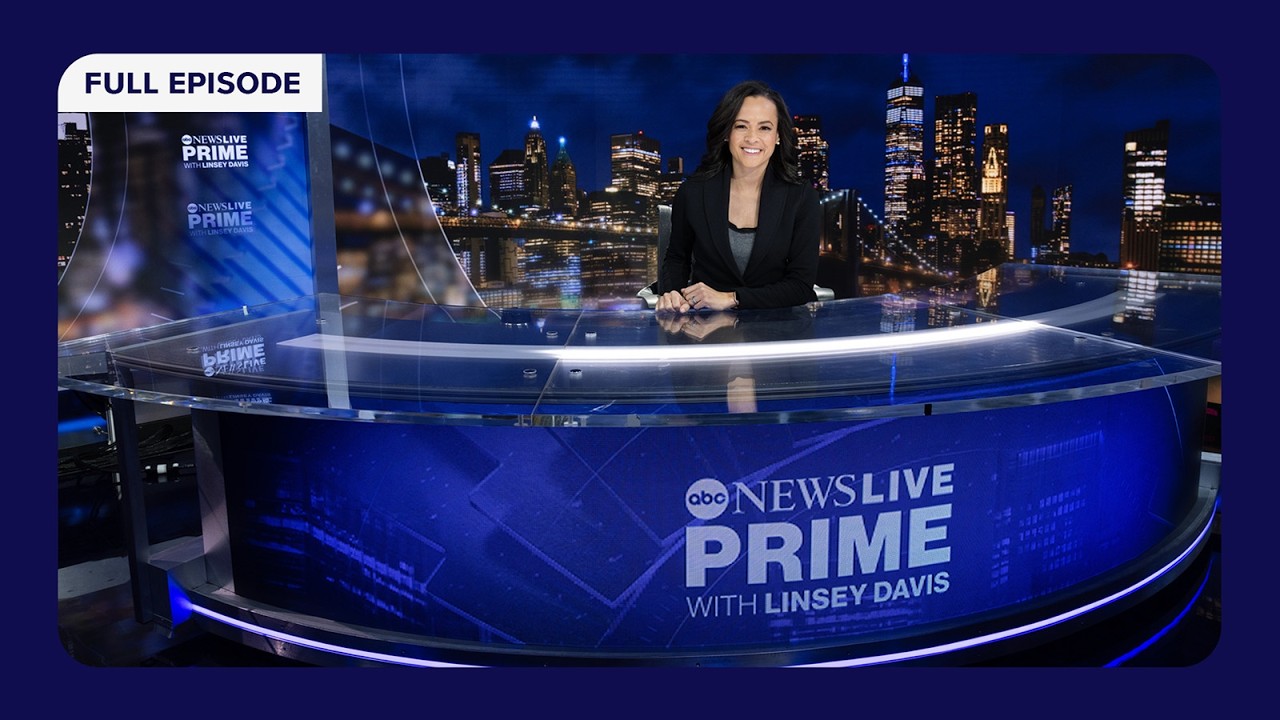
Dangerous heat alerts for 150 million; dramatic rescues in Venezuela days after quakes; the teen at the center of the SCOTUS case deciding transgender athletes' participation in women's sports.
Subscribe to ABC News on YouTube: https://abcnews.visitlink.me/59aJ1G
ABC News Digital is your daily source of breaking national and world news, exclusive interviews and 24/7 live streaming coverage.
Download the ABC News app for the latest headlines and alerts: https://abcnews.go.com/devices
Watch 24/7 coverage of breaking news and live events on ABC News Live: https://www.youtube.com/watch?v=gN0PZCe-kwQ&ab_channel=ABCNews
Watch full episodes of World News Tonight with David Muir here: https://youtube.com/playlist?list=PLQOa26lW-uI8ixlVw1NWu_l4Eh8iZW_qN&feature=shared
Read ABC News reports online: http://abcnews.go.com
ABC News is the home to the #1 evening newscast “World News Tonight” with David Muir, “Good Morning America,” “20/20,” “Nightline,” “This Week” with George Stephanopoulos, “ABC News Live Prime” with Linsey Davis, plus the daily news podcast “Start Here.”
Connect with ABC News on social media:
Facebook: https://www.facebook.com/ABCNews
Instagram: https://www.instagram.com/abcnews
TikTok: https://www.tiktok.com/@abcnews
X: https://twitter.com/ABC
Threads: https://www.threads.net/@abcnews
WhatsApp: https://whatsapp.com/channel/0....029VajTNakKWEKkXoAPI
LinkedIn: https://www.linkedin.com/company/abcnews